A smaller first step
A lighter first step than a full rooftop system
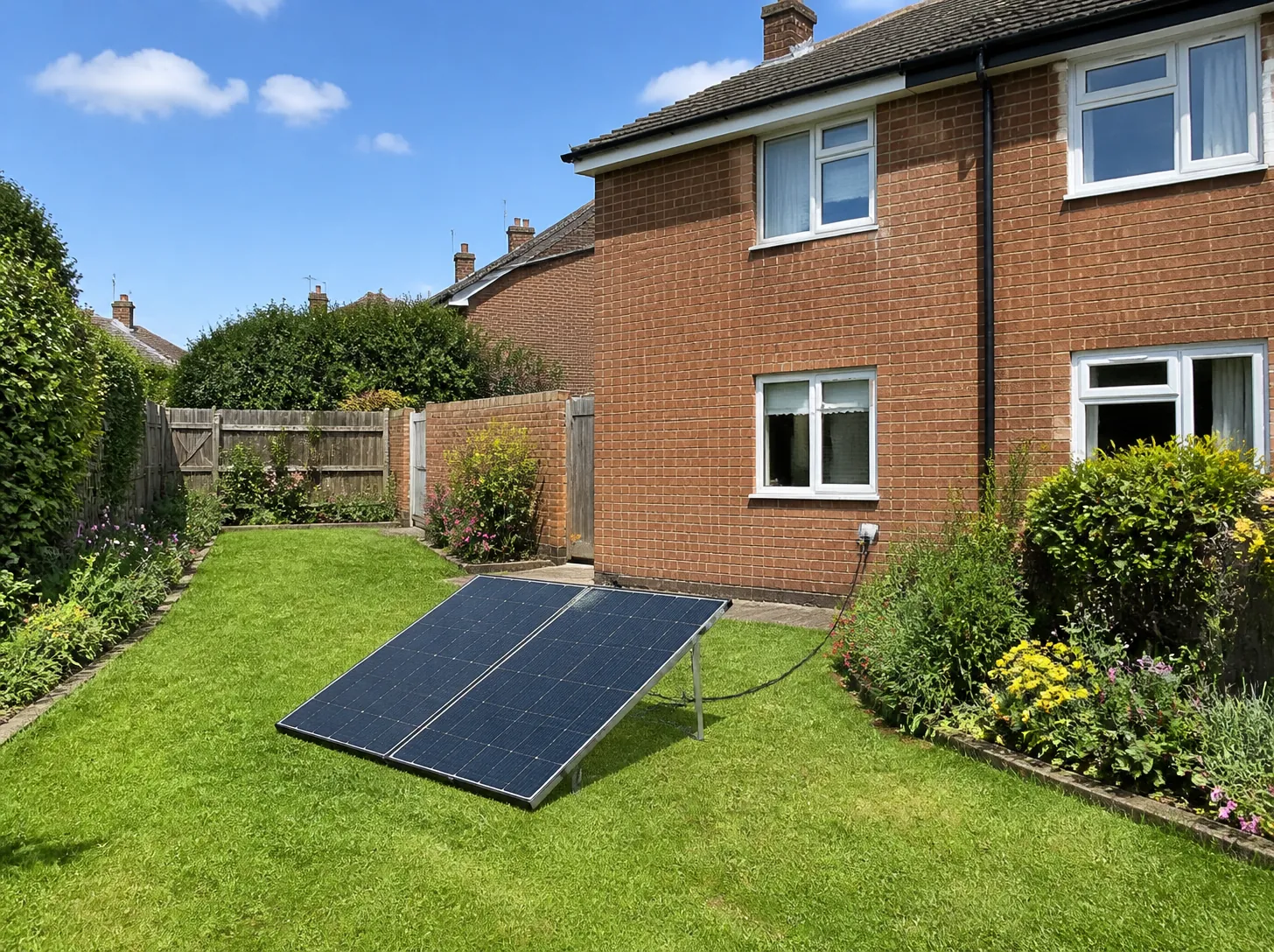
Plug-in solar is a small kit: panels on a stand in the garden, plugged into an outdoor socket. No scaffold and no roof work. It won't do what a rooftop system does, but it starts on your bill from the first sunny morning.
Who is this option for?
- You rent your home and your landlord has said yes in writing
- You live in a flat or a leasehold home with your own garden or yard, and you have written permission where it's needed
- You'd like to see what solar does for your bills before you think about a rooftop system
- Your roof is shared, listed, or just not one you want to put scaffold up to yet
What can a small kit realistically do?
A plug-in kit feeds up to 800W (799VA) into your home. Your fridge, router, washing machine and anything else running in the day uses that power first, before you buy any from the grid.
A larger kit in a sunny spot could save around £180 a year* for a busy family home. That's real money for a kit you set up yourself, with no installer and no scaffold.
*An estimate, not a promise. It assumes a 1260W kit facing south with no shade, in North West England, in a busy four-person home that uses 70% of what the kit makes, at the Ofgem price cap unit rate of 26.32p per kWh (1 October to 31 December 2026). That works out at around £1,760 over 10 years and £3,430 over 20. Power sent back to the grid isn't paid for. Your saving will vary with your spot, your tariff and when you use electricity.
What are the rules for plug-in solar?
- Register the kit free at myplugin.solar before you first use it. That tells Electricity North West, the network operator for Greater Manchester, that it's there.
- One kit per household.
- Kits can be used in England, Scotland and Wales, not Northern Ireland, the Isle of Man or the Channel Islands.
- Never use a plug-in kit with a home battery.
- Plug it straight into a weatherproof outdoor socket within reach of the kit's own cable (many kits have a 4m cable). No extension leads.
- Your home needs modern RCD protection. An electrician can fit an outdoor socket or check your fuse box if you need it.
- Kits with more than 960W of panels should have a professional check of your home's electrics first.
- Tell your home insurer, and get written permission first if you rent or your home is leasehold.
How do you move up to rooftop later?
Easily. When you're ready for a rooftop system, ask for quotes in the usual way and mention the plug-in kit at the survey, so the installer can plan around it.
A year with a plug-in kit is also a good way to learn when your home uses power, which helps you decide on the size of a rooftop system and whether a battery is worth it.
Do you sell plug-in kits?
No. This site is for rooftop solar and home battery quotes. We've put this page here because a plug-in kit is a sensible option for some homes that can't have rooftop panels yet.
Do I need an electrician for a plug-in kit?
You set the kit up yourself. You do need a weatherproof outdoor socket close enough for the kit's cable, and modern RCD protection. If you haven't got those, an electrician can fit or check them.
Can I put a plug-in kit on the roof?
Most kits are made for the ground. Some can go on a wall or a flat roof, but only after a professional assessment. Rooftop panels on a pitched roof are a job for an installer.
Think your roof could work after all?